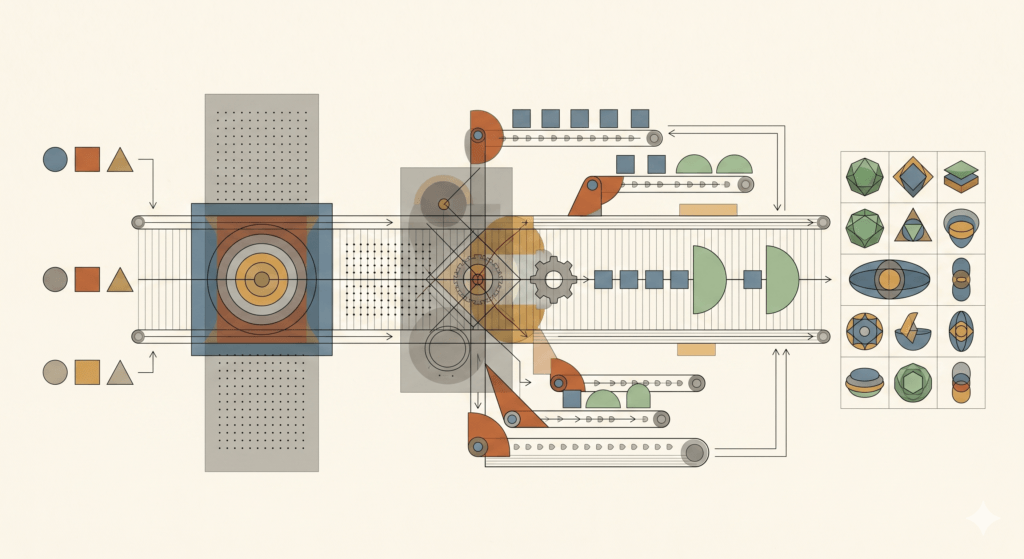
In 1983, Steve Jobs tried to explain what made computers magical.
He said that if he could move 100 times faster than anyone in the room, he could run out, grab a bouquet of flowers, come back, snap his fingers, and everyone would think he was a magician. But all he was doing was a series of very simple instructions, very fast. That’s it.
“I was basically doing a series of really simple instructions… but I could just do them so fast that you would think there was something magical going on.”
That’s exactly how AI works when it’s building an app, a website, a text, or a slide deck. It launches multiple individual agents to complete a small task. Together, in parallel, they execute at the speed of light. You see the result appear on screen in seconds. It looks like magic.
But magic and differentiation are not the same thing.
Henry Ford Got There First
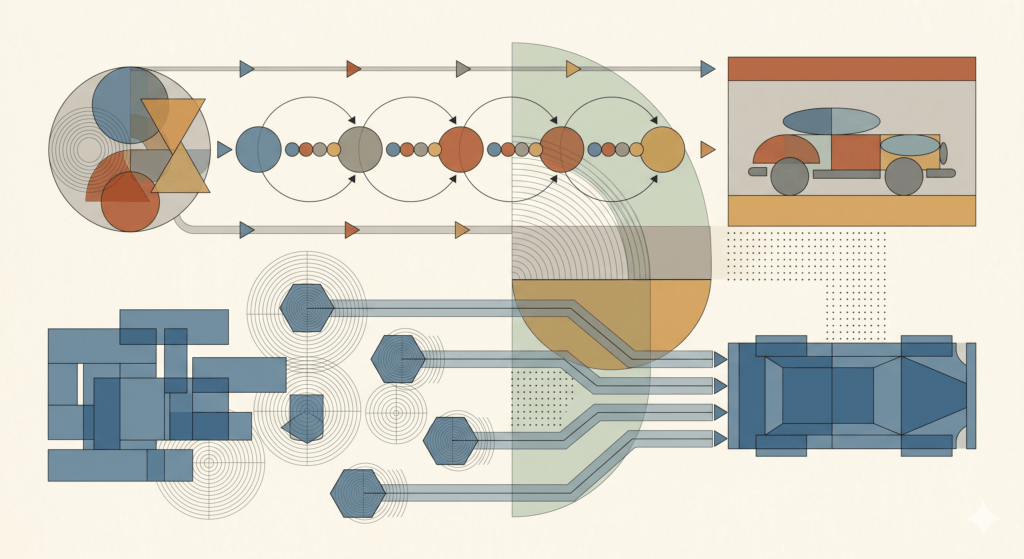
In 1913, Henry Ford introduced the assembly line to car manufacturing.
Until then, cars were built by groups of skilled craftsmen, each responsible for multiple parts of the same vehicle. Imagine a team of five or six people building one car at a time, start to finish.
Ford had an idea.
The idea was simple: break this complex process into small, repeatable tasks, assign each task to a different operator, and let the assembly line run. It was revolutionary at the time.
Ford said: “Nothing is particularly hard if you divide it into small jobs.”
The results were extraordinary. Ford produced cars faster and cheaper than any competitor. By 1926, Ford was manufacturing half of all the cars sold in the world.
Breaking the process into small, specialized, sequential tasks accelerated everything. Sound familiar?
Today, an AI sub-agent system breaks down a complex programming problem into small tasks, assigns each task to a different agent, and lets the process run. In parallel. At scale. Much faster than any developer working alone or a single agent working in waterfall.
Henry Ford invented sub-agents. He just didn’t have access to Claude.
The Ford Model T Problem
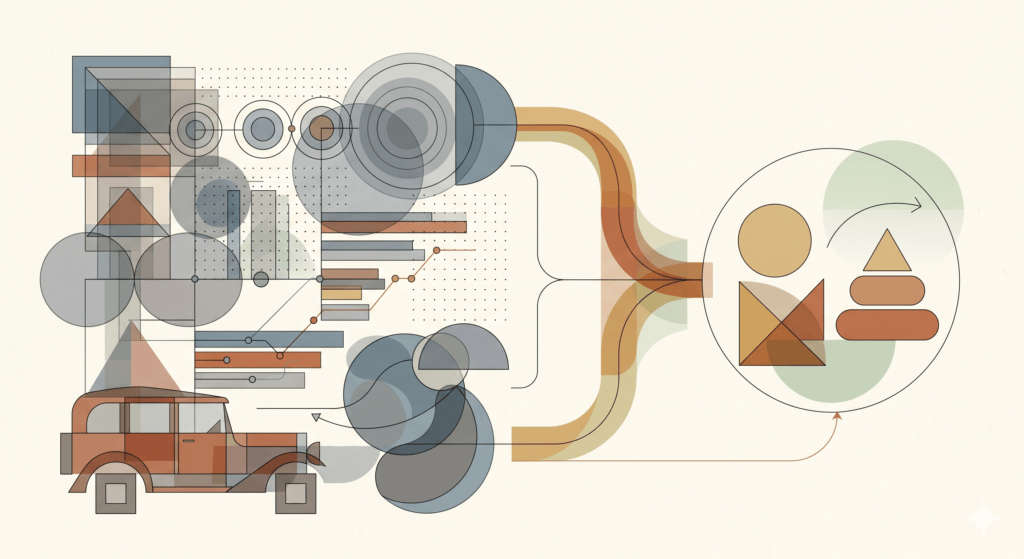
When everyone has access to the same factory, all the products look the same.
AI-generated apps use TailwindCSS and the same out-of-the-box UI components. They use well-known UX patterns repeated across hundreds of products. The result is always very similar: functional, fast to build, and aesthetically indistinguishable from everything else.
Like IKEA furniture. IKEA brings functionality, modularity, and ease of assembly. But spaces become essentially identical without any personal touch.
I’ve spent three months building a running training planner with vibe coding. Every time I ask Claude to run a task using a sub-agent driven approach without giving clear UX direction and style, the result is standard. Not bad. Standard. The factory works. It just always produces the same model.
And here’s the problem that Rory Sutherland puts better than I ever could:
“It is much easier to be fired for being illogical than it is for being unimaginative. The fatal issue is that logic always gets you to exactly the same place as your competitors.”
The logic of sub-agents is impeccable. And it takes everyone to exactly the same place.
The Difference Between 42 ms and a Sentence
There’s a difference between an output and an intention.
A running app can collect all your metrics from the past few months and display them in charts, tables, and comparisons. There are dozens of them on GitHub. The AI factory does this well. Very well, even. But if I tell you your average HRV is 42 ms on a line chart plotted by day, you might find it fascinating and have no idea what to do with it.
If I turn that into a sentence: “Your body has high recovery needs. You should rest today.” — I’m giving you the same information in a completely different register. One compiles data. The other talks to the runner.
That layer doesn’t come out of the factory. It comes in through the design door.
The factory produces the Ford Model T. Human intention turns it into what the user actually needs to receive.
The Alternative to Efficiency Isn’t More Efficiency
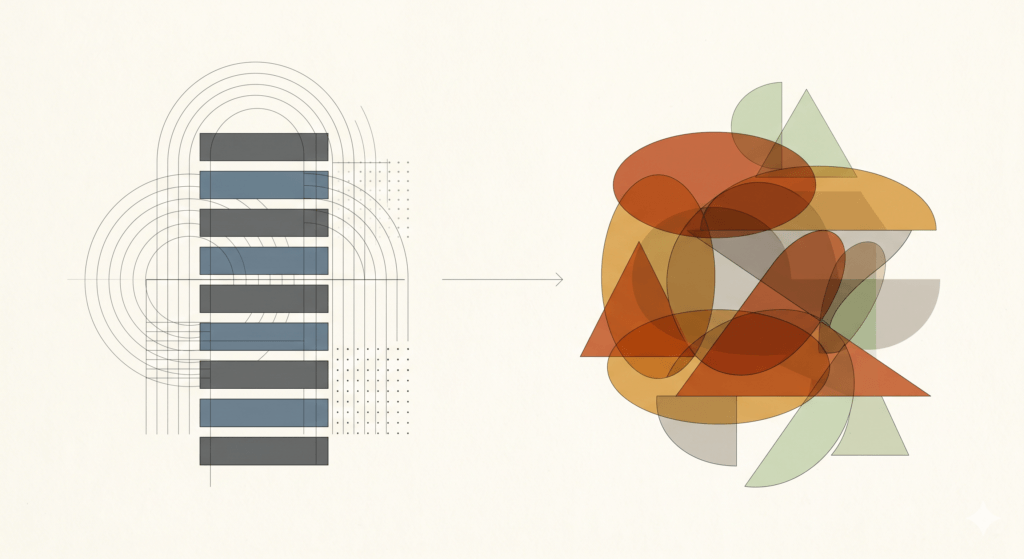
There’s a movement today that isn’t a coincidence.
Any tourist traveling through Europe notices the same thing: gentrification. Everything is starting to look the same everywhere. The same spots, the same stores, the same products, the same people.
Urban architecture that values the organic over the brutalist. Cafés with a personal touch holding out against the big chains. Websites that break away from the overused patterns and stand out precisely because of that. Work where human presence is visible.
It’s not nostalgia. It’s differentiation.
When everyone has access to the same factory and produces at the same cost, what sets you apart isn’t speed. It’s intention.
General Motors spotted the opportunity when it redesigned all its models every year, following the logic of fashion: you could immediately tell what year a car was from. Ford kept producing the same Model T, cheaper every year, identical every year. GM didn’t try to beat Ford at its own game. It changed the game. Before long, GM had become the largest car manufacturer in the world.
The alternative to the Ford Model T wasn’t a more efficient Model T. It was a different idea.
AI, used well, with careful and intentional human curation, can produce more immersive and more differentiated experiences than was ever possible before. But only if direction is given. The factory doesn’t know where it wants to go.
A New Era of Cooperation
This article is not a critique of AI.
It’s a repositioning.
AI already replaces part of the work. The repeatable, standardizable, sequenceable part. The assembly line.
What it doesn’t yet replace is the question that comes before the assembly line: what? For whom? Why now? What emotion should it create? What are the corner cases? What happens when the user doesn’t follow the happy path?
That part still needs a person. With intention.
AI expands our capacity to produce. Human intention defines what’s worth producing.
It’s not a competition. It’s a cooperation.
Not better. Different.